Understanding Human Movement
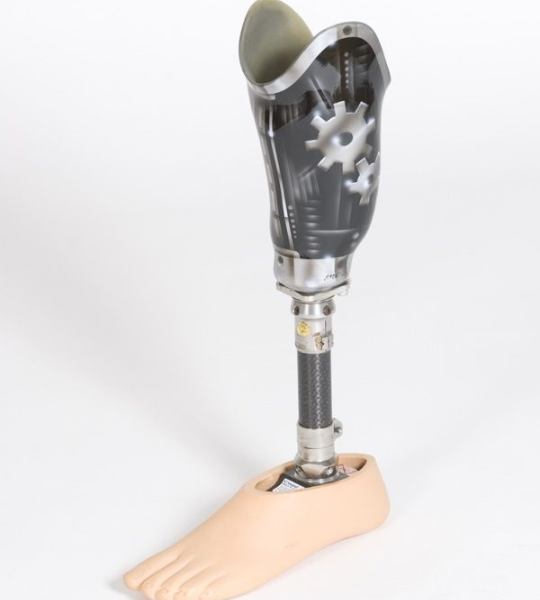
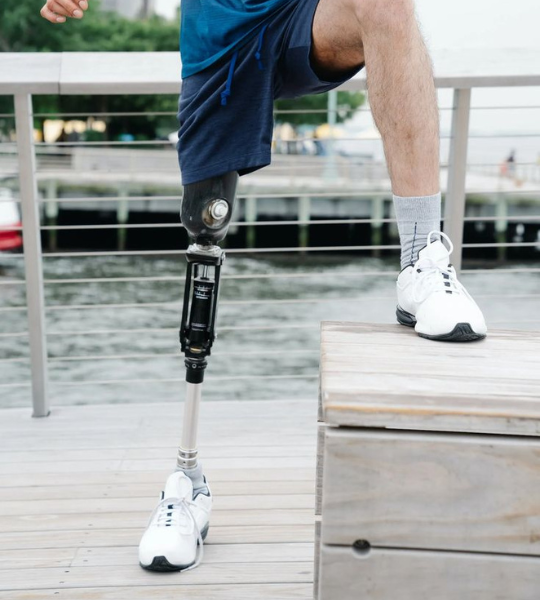
The human body is a highly complex mechanical system involving coordinated movement between bones, muscles, joints, and soft tissues. Prosthetic devices must work within this system while compensating for changes in anatomy and movement mechanics.
Our analysis focuses on:
• Gait and movement patterns — Evaluating walking dynamics, step cycles, balance, and
movement efficiency.
• Force and load analysis — Understanding how forces are transferred through the body and
prosthetic structure during different activities.
• Joint mechanics — Studying movement ranges, alignment, and functional requirements for
prosthetic joints.
• User interaction — Examining how users control, adapt to, and experience prosthetic
devices.
• Ergonomic requirements — Identifying factors that influence comfort, usability, and longterm acceptance.
These insights provide the engineering foundation needed to create prosthetic designs that better
support natural movement and reduce unnecessary physical strain.
Human-Centered Engineering Approach
Prosthetic technology must be designed around the needs of the person using it. Our human-centered approach considers not only technical performance but also the practical experiences and challenges users encounter in daily life.
During development, we consider:
• Individual anatomical differences
• Mobility requirements and activity levels
• Comfort and pressure distribution
• Ease of use and adjustment
• Interaction with everyday environments
• Long-term user experience
By placing the user at the center of the engineering process, we help create solutions that are more functional, adaptable, and meaningful.
Engineering Methods & Analysis
Biomechanical understanding is translated into practical engineering decisions through analysis and design evaluation. We use biomechanical principles to guide component development, system integration, and design optimization.
Our engineering activities may include:
• Movement assessment and functional analysis
• Mechanical load evaluation
• Alignment studies
• Ergonomic design evaluation
• Performance comparison of design concepts
• Integration of biomechanical requirements into CAD models and engineering specifications
These methods help identify design opportunities and challenges before physical prototyping,
improving efficiency throughout the development process.
Engineering Challenges
One of the main challenges in prosthetic engineering is replicating the complexity of human movement. The human body naturally adapts to different surfaces, speeds, and activities, while prosthetic systems must achieve similar functionality through engineered mechanisms.
Key challenges include:
• Managing variable movement conditions — Users may walk, stand, climb, or perform
activities with constantly changing mechanical demands.
• Balancing stability and mobility — Prosthetic systems must provide support without
restricting natural movement.
• Reducing user effort — Poorly optimized designs can increase energy expenditure and
physical fatigue.
• Accounting for individual differences — Human anatomy and movement patterns vary
significantly between users.
• Translating biological behavior into engineering requirements — Complex human
movement must be converted into measurable design criteria.
Supporting Advanced Prosthetic Development
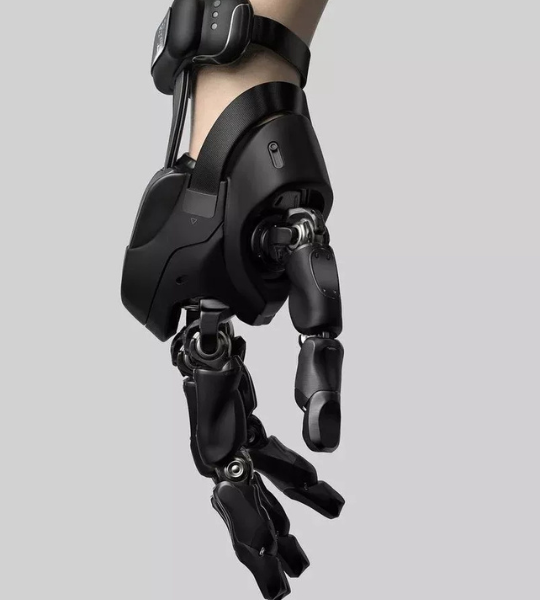
Biomechanical analysis provides the connection between human needs and engineering solutions. By understanding how users move and interact with prosthetic systems, we help development teams create designs that are better aligned with real-world requirements.
Our expertise supports prosthetic innovation by providing:
• Evidence-based design guidance
• Functional performance evaluation
• User-focused engineering insights
• Improved component integration
• Design recommendations for future development
Through biomechanics and human-centered engineering, we help transform prosthetic concepts into solutions that are designed around the people who rely on them.