Smart Prosthetics & Control System Integration
Smart prosthetic systems combine mechanical engineering, electronics, sensors, and software-driven
control technologies to create more responsive and adaptive prosthetic solutions. We engineer the
integration of these technologies to support advanced prosthetic concepts that can better respond to
user movements, activity patterns, and changing environmental conditions.
Our design process begins with defining the functional requirements of the intelligent prosthetic
system. We evaluate how users interact with the device, what movements need to be controlled, and
how information should flow between sensors, processing systems, and mechanical components.
Through system architecture development, digital modeling, and engineering analysis, we create
integrated solutions that connect physical components with intelligent control capabilities.
Developing smart prosthetics requires coordination between multiple engineering disciplines.
Mechanical structures, electronic components, embedded systems, and user interfaces must operate
together as a unified system. Our work focuses on ensuring that these technologies are effectively
integrated while maintaining reliability, usability, and practical performance.
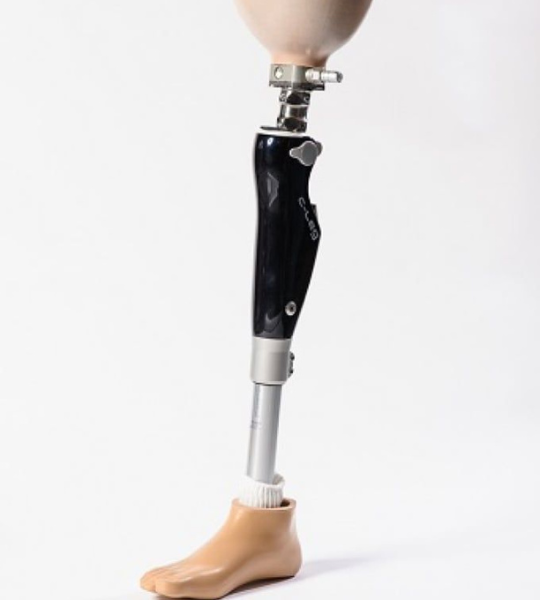
Key engineering considerations include:
• Sensor integration — Sensors must accurately capture movement, force, position, or
environmental information while remaining compact and reliable within the prosthetic
system.
• Control system architecture — Engineers must design effective communication between
sensors, processing units, and mechanical components to enable responsive device behavior.
• Real-time performance — Smart prosthetics require fast and reliable responses to user
inputs and changing movement conditions.
• Power management — Electronic systems must be designed with efficient energy use to
support practical operation and user convenience.
• Human-device interaction — Control methods must be intuitive, allowing users to operate
advanced functions naturally and effectively.
One of the main engineering challenges is translating human intention into reliable device
movement. The human nervous and muscular systems provide complex signals that allow natural
movement, while prosthetic systems must interpret available inputs through engineered sensors and
control algorithms. Creating accurate and predictable responses requires careful integration of
hardware, software, and mechanical systems.
Another challenge is balancing technological capability with practical usability. Advanced features
can improve prosthetic performance, but they also introduce additional complexity, weight, cost,
and maintenance requirements. Engineers must identify which technologies provide meaningful
improvements while ensuring the system remains reliable and accessible.
Environmental reliability is also a key consideration. Smart prosthetic systems must operate under
changing conditions, including variations in movement, temperature, moisture, and daily use
environments. Through multidisciplinary engineering, system integration, and performance
optimization, we develop concepts for intelligent prosthetic platforms that enhance adaptability and
user functionality.
Our engineering approach supports the development of next-generation prosthetic technologies by
connecting mechanical design with intelligent systems, enabling more responsive and personalized
solutions.