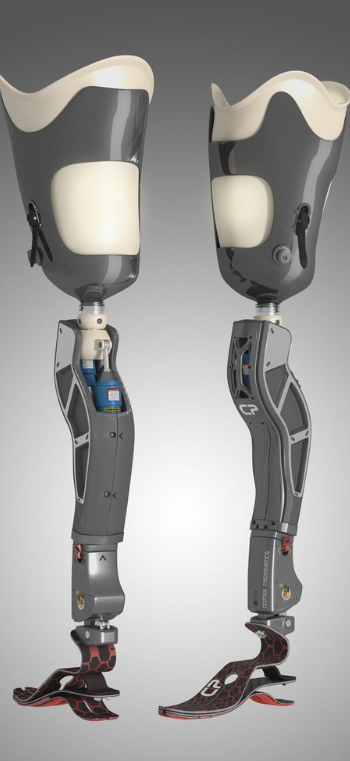
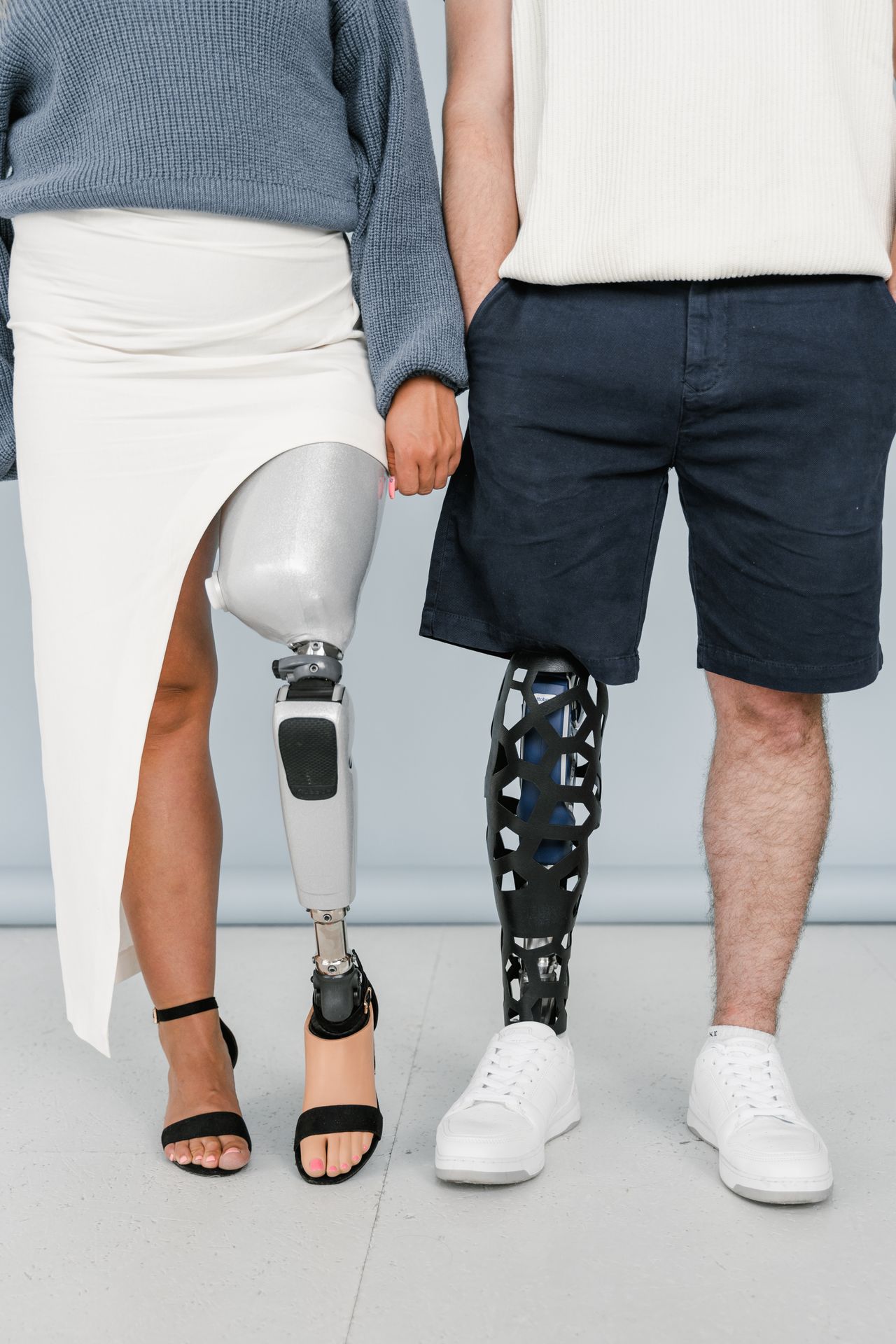
The successful development of prosthetic technology requires more than individual component design. It requires a coordinated understanding of human biomechanics, mechanical performance, system integration, user requirements, and manufacturing considerations. The company acts as an engineering partner throughout the development process, providing the technical expertise required to move projects from early-stage concepts toward detailed, production-oriented solutions. By supporting organizations with specialized engineering capabilities, the company helps bridge the gap between innovation and implementation. Projects are approached with consideration for practical application, ensuring that designs are not only technically advanced but also suitable for evaluation, prototyping, and eventual manufacturing.
Prosthetic devices operate at the intersection of engineering performance and human interaction.
Unlike conventional mechanical products, prosthetic systems must function within a highly dynamic
environment where movement, comfort, durability, and usability are equally important.
Engineering decisions must account for factors such as changing loads during movement,
anatomical differences between users, long-term mechanical reliability, and practical daily use
conditions. The company applies a human-centered engineering approach to ensure that technical
solutions are developed with the user experience in mind.
Through biomechanical analysis, digital engineering, and iterative refinement, prosthetic concepts
are developed to achieve a balance between mechanical capability and real-world functionality.
The company provides engineering support across the full prosthetic development lifecycle, from initial concept definition through design refinement and manufacturing preparation. Each project begins with understanding the functional objectives, technical requirements, and intended application of the prosthetic system.
These capabilities allow development teams to access specialized engineering expertise without requiring all technical disciplines to exist internally. The result is a more efficient development process supported by experienced engineering collaboration.
Contact Us

Prosthetic devices operate at the intersection of engineering performance and human interaction.
Unlike conventional mechanical products, prosthetic systems must function within a highly dynamic
environment where movement, comfort, durability, and usability are equally important.
Engineering decisions must account for factors such as changing loads during movement,
anatomical differences between users, long-term mechanical reliability, and practical daily use
conditions. The company applies a human-centered engineering approach to ensure that technical
solutions are developed with the user experience in mind.
Through biomechanical analysis, digital engineering, and iterative refinement, prosthetic concepts
are developed to achieve a balance between mechanical capability and real-world functionality.
A key focus of the company is delivering engineering solutions that can transition efficiently into
the manufacturing process. Product development does not end with a digital concept; successful
implementation requires detailed engineering information that enables manufacturers to accurately
produce and evaluate the design.
Manufacturing-ready engineering packages may include:
• Detailed CAD models and assemblies
• Engineering drawings and specifications
• Component interfaces and tolerances
• Material and structural considerations
• Design documentation and technical requirements
Designs are developed with production requirements in mind from the beginning, reducing potential
challenges during manufacturing collaboration. This approach allows manufacturers to receive
clearly defined engineering solutions that support efficient product realization.
The company works primarily with organizations involved in the development and production of
prosthetic technologies. Rather than manufacturing prosthetic components directly, the company
provides the engineering expertise required to help manufacturers and technology developers create
improved products.
Collaboration partners include prosthetic manufacturers seeking new product development support,
medical technology companies expanding their engineering capabilities, research organizations
exploring future mobility solutions, and technology companies integrating advanced electronics or
intelligent systems into prosthetic platforms.
By working alongside established manufacturing partners, the company ensures that engineering
designs consider production requirements, technical feasibility, and commercial application from the
earliest development stages.
Engineering expertise covers a broad range of prosthetic technologies, supporting both individual component development and complete system solutions. The company designs mechanical and integrated prosthetic systems with consideration for performance, reliability, user interaction, and future manufacturing requirements.
Each development project is approached according to its specific technical requirements, ensuring that the final engineering solution aligns with the intended application and performance objectives.

Continuous innovation is essential for advancing prosthetic technology beyond current limitations.
The company explores emerging engineering approaches that improve mobility, adaptability, and
interaction between humans and assistive technologies.
Research activities focus on areas such as intelligent prosthetic systems, advanced mechanical
architectures, lightweight structural solutions, digital simulation methods, and improved humanmachine interfaces. These areas represent important opportunities for improving prosthetic
performance while addressing challenges related to comfort, control, and usability.
Innovation activities are guided by practical engineering objectives, ensuring that new concepts are
evaluated not only for technical potential but also for their ability to become realistic future
solutions.
Every prosthetic development project follows a structured engineering process designed to reduce
uncertainty and improve technical outcomes. Beginning with requirements analysis, the process
progresses through concept development, digital design, engineering evaluation, optimization, and
preparation for prototype or manufacturing stages.
The company combines engineering discipline with flexibility, adapting its approach based on
project maturity, technology requirements, and partner objectives. Whether supporting an early
research concept or refining an existing prosthetic design, the focus remains on delivering highquality engineering solutions that support successful product development.
This structured methodology allows complex prosthetic challenges to be converted into clearly
defined engineering objectives and practical development pathways.
The future of prosthetic technology depends on collaboration between engineers, manufacturers,
researchers, clinicians, and technology developers. By providing specialized engineering capabilities
and manufacturing-focused design expertise, the company supports organizations working to
advance human mobility solutions.
Through a combination of technical knowledge, innovation, and collaborative development, the
company contributes to the creation of prosthetic technologies that are more functional, reliable, and
adaptable. The goal is to enable partners to bring advanced prosthetic solutions from concept to
reality while addressing the evolving needs of users and the healthcare technology industry.