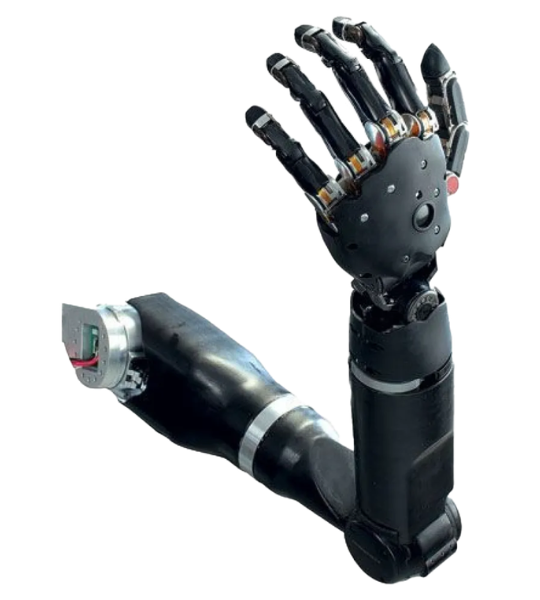
Engineering Approach
Every prosthetic development project begins with understanding the intended purpose of the device, the target users, and the functional requirements it must achieve. We work with clinical experts, researchers, and technology partners to define key design objectives, including expected movement capabilities, load requirements, user interaction, and system constraints.
Our engineering process includes:
• Load management and force distribution — Prosthetic structures must safely transfer
forces generated during walking, running, climbing, and other daily activities while
minimizing stress concentrations that could lead to failure.
• Weight optimization — Reducing unnecessary mass is critical for comfort and energy
efficiency, while maintaining the structural strength required for reliable operation.
• Material and structural design — We evaluate material properties, stiffness, fatigue
resistance, and manufacturing feasibility to develop practical and durable component
designs.
• Modular integration — Prosthetic systems often require interchangeable components,
requiring precise connection standards, alignment mechanisms, and secure attachment
solutions.
• User-specific adaptation — Structural designs must accommodate differences in body
geometry, mobility requirements, and activity levels to provide effective solutions for
different users.
Designing for Human Movement
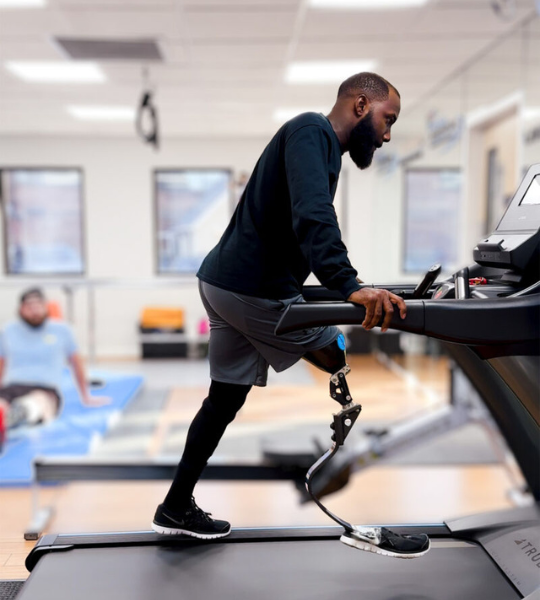
Unlike conventional mechanical products, prosthetic limbs must interact directly with the human body and support complex movement patterns. Engineers must consider how the device responds during walking, standing, lifting, reaching, and other everyday activities.
Our designs account for factors such as:
• Natural movement patterns and biomechanics
• Force transfer between the body and prosthetic system
• User comfort and ergonomics
• Range of motion requirements
• Stability and balance
• Long-term usability
The objective is not simply to create a mechanically functional device, but to engineer a system that supports natural interaction between the user and the technology.
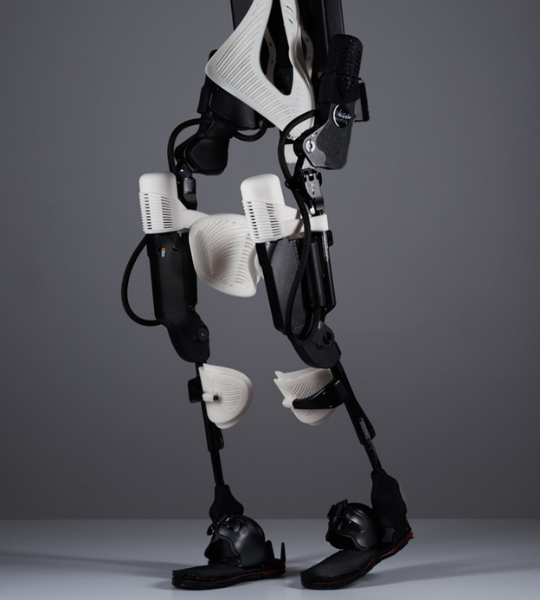
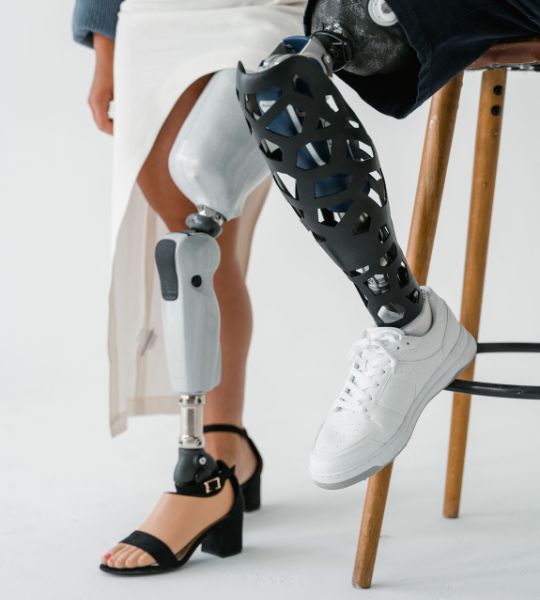
Engineering Challenges
Prosthetic limb development involves several complex engineering challenges. One of the most important is balancing performance characteristics that often compete with one another. A prosthetic component must be lightweight enough for comfortable daily use while also being strong enough to withstand repeated mechanical loading.
Key challenges include:
• Strength versus weight optimization — Reducing mass while maintaining structural integrity and
fatigue resistance.
• Mechanical reliability — Designing systems capable of handling thousands of repeated movement
cycles.
• User adaptability — Creating solutions that can accommodate different body types, mobility levels,
and activity requirements.
• Component integration — Ensuring that sockets, joints, structural elements, sensors, and control
systems function together effectively.
• Design flexibility — Developing concepts that can evolve through testing, feedback, and future
technology improvements.
Digital Engineering & Design Optimization
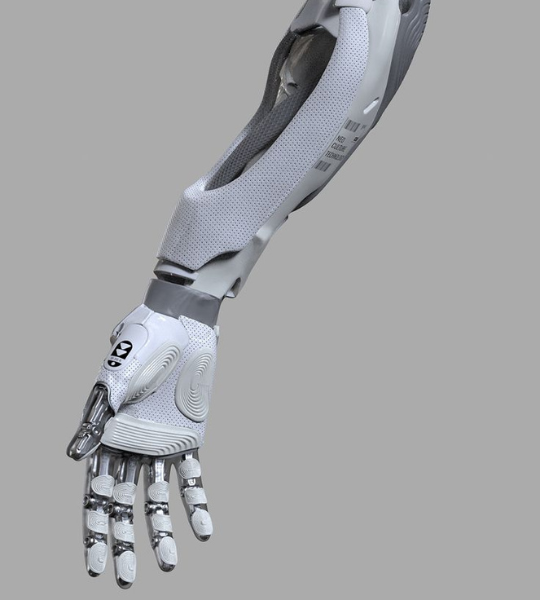
UnlModern prosthetic development relies heavily on digital engineering tools to improve design quality and reduce development time. We use advanced modeling and analysis approaches to evaluate concepts before physical prototyping.
Digital engineering allows us to assess::
• Structural behavior under different loading conditions
• Component interaction and mechanical movement
• Design alternatives and improvements
• Weight reduction opportunities
• Integration of advanced technologies
By identifying potential issues early in development, engineering analysis helps create more reliable and efficient prosthetic solutions.
Supporting the Development Process
We provide engineering expertise that helps bridge the gap between innovation and practical implementation. While we focus on design and development rather than manufacturing, our work supports the transition from initial concepts into validated engineering solutions.
Our services enable companies, research organizations, and medical technology developers to advance prosthetic innovations through:
• Technical design expertise
• Engineering problem-solving
• System-level development support
• Prototype preparation
• Collaboration with manufacturing and clinical partners
solutions.
Through a combination of mechanical engineering, biomechanics, and medical technology
understanding, we develop prosthetic limb concepts designed to improve mobility, independence,
and quality of life for users.