Prosthetic Joints & Movement Mechanisms
Prosthetic joints are critical components that determine how naturally and effectively a prosthetic
limb can replicate human movement. We engineer prosthetic joint systems, including knee, ankle,
elbow, and wrist mechanisms, with a focus on controlled motion, stability, durability, and seamless
integration with the overall prosthetic structure.
Our design process begins with understanding the intended movement requirements, user activity
level, and mechanical demands placed on the joint. We analyze human biomechanics to understand
natural joint behavior, including range of motion, force transmission, balance, and movement
patterns. These insights are translated into mechanical designs that aim to provide reliable and
efficient motion while supporting the user’s daily activities.
Using CAD development, mechanical simulation, and engineering analysis, we create joint concepts
that consider both functional performance and practical integration within a complete prosthetic
system. Depending on the application, designs may incorporate passive mechanical elements,
adjustable mechanisms, or interfaces for advanced control technologies.
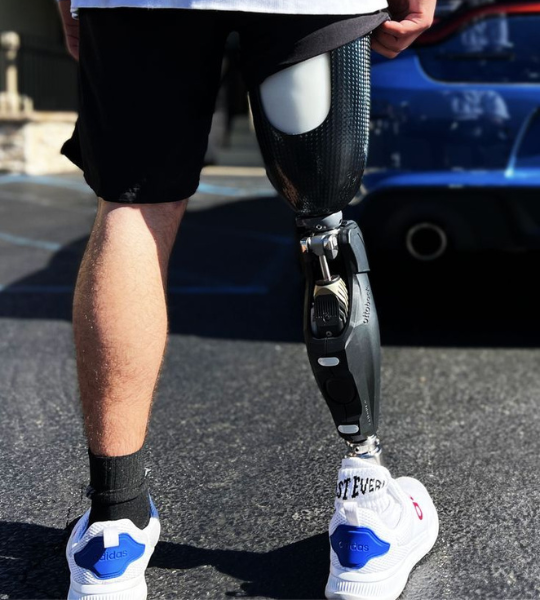
Key engineering considerations include:
• Natural movement replication — Prosthetic joints must approximate human joint behavior
by providing appropriate movement patterns, resistance, and stability during different
activities.
• Mechanical strength and durability — Joints experience repeated high loads and must
withstand millions of movement cycles while maintaining reliable performance.
• Motion control and stability — Engineers must balance freedom of movement with
sufficient control to prevent instability during walking, standing, or other activities.
• Energy efficiency — Joint mechanisms must minimize unnecessary energy loss to reduce
user fatigue and improve mobility.
• Component integration — Joint designs must connect effectively with other prosthetic
elements while maintaining proper alignment and mechanical performance.
One of the main engineering challenges is recreating the complexity of human movement with a
mechanical system. Human joints naturally adjust to changing conditions, surfaces, and activities,
while prosthetic joints must achieve similar adaptability through carefully engineered mechanisms.
Small variations in geometry, stiffness, damping, and alignment can significantly affect comfort and
functionality.
Another challenge is managing the balance between mobility and control. A joint that allows too
much movement may reduce stability, while a joint that is too restricted may limit natural motion
and increase energy demands on the user. Engineers must carefully optimize these characteristics
based on the intended application and user requirements.
Reliability is also a major consideration, as prosthetic joints are exposed to continuous loading,
impacts, and environmental conditions throughout their service life. Through mechanical analysis,
performance testing strategies, and iterative design optimization, we develop joint mechanisms that
support safe, efficient, and functional prosthetic movement.
Our engineering expertise enables the development of advanced prosthetic joint solutions that serve
as the foundation for improved mobility, adaptability, and user experience.