Prosthetic Sockets & Human-Limb Interfaces
Prosthetic sockets and human-limb interfaces are among the most critical elements of a prosthetic
system because they form the direct connection between the user and the device. We engineer
socket concepts that provide secure attachment, effective load transfer, comfort, and stability while
accounting for the unique anatomical and functional requirements of each user.
Our design process begins with understanding the interaction between the human body and the
prosthetic system. We analyze anatomical structures, pressure distribution, movement patterns, and
weight-bearing requirements to develop interface solutions that support comfortable and reliable
use. Through digital modeling, biomechanical analysis, and engineering evaluation, we create socket
designs that optimize the connection between the user and the prosthetic limb.
Unlike many mechanical components, prosthetic interfaces must account for the complexity and
variability of the human body. The design must distribute forces effectively while avoiding
excessive pressure on sensitive areas. Our engineering approach focuses on creating solutions that
balance mechanical stability with biological comfort.
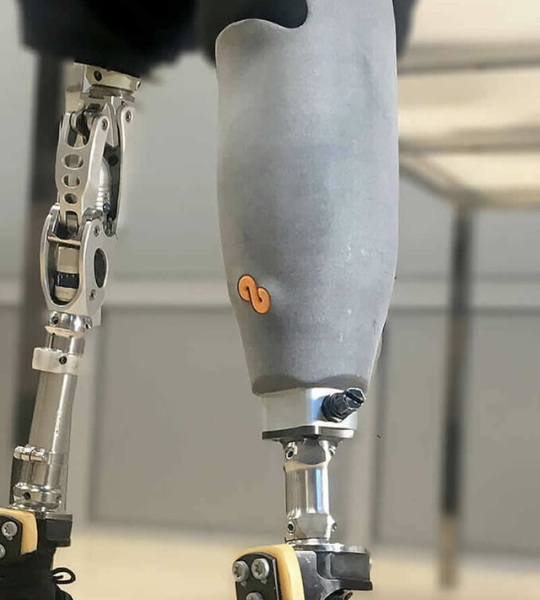
Key engineering considerations include:
• Pressure distribution and comfort — Socket designs must manage forces across the
residual limb while minimizing areas of excessive pressure or discomfort.
• Secure attachment and stability — The interface must maintain reliable connection
between the user and prosthetic system during movement and daily activities.
• Biomechanical alignment — Proper positioning and alignment are essential for efficient
movement, balance, and reduced physical strain.
• User-specific customization — Human anatomy varies significantly, requiring designs that
can accommodate individual shapes, conditions, and mobility requirements.
• Integration with prosthetic components — The socket must connect effectively with
structural elements, joints, and other prosthetic systems.
One of the primary engineering challenges is designing a component that interacts directly with
living tissue. Unlike traditional mechanical connections, the prosthetic interface must accommodate
changes in body shape, movement, and soft tissue behavior. Engineers must consider both
mechanical forces and human comfort throughout the design process.
Another challenge is achieving the right balance between retention and comfort. A secure
connection is necessary for effective control of the prosthetic limb, but excessive restriction or
pressure can negatively affect user experience. Engineers must optimize geometry, support areas,
and interface behavior to achieve a stable yet comfortable solution.
Long-term performance is also an important consideration. Users rely on prosthetic interfaces
throughout daily activities, meaning designs must account for repeated loading, movement cycles,
and changing conditions. Through biomechanical analysis, digital design methods, and iterative
refinement, we develop socket and interface concepts that improve comfort, control, and overall
prosthetic performance.
Our engineering expertise helps transform anatomical requirements into functional interface
solutions that support the successful integration of advanced prosthetic limb systems.