Prosthetic Limb Structures & Modular Systems
The structural framework of a prosthetic limb determines how forces are transferred, how
components interact, and how effectively the device supports human movement. We engineer
prosthetic structures including frames, pylons, connectors, and modular support systems with a
focus on strength, weight reduction, adaptability, and long-term reliability.
Our engineering process begins by defining the functional requirements of the prosthetic system,
including intended mobility level, expected loading conditions, user requirements, and compatibility
with existing components. We translate these requirements into mechanical concepts and develop
detailed digital models using advanced CAD design methods. Through simulation, engineering
analysis, and design refinement, we create structural solutions that balance performance, durability,
and user comfort.
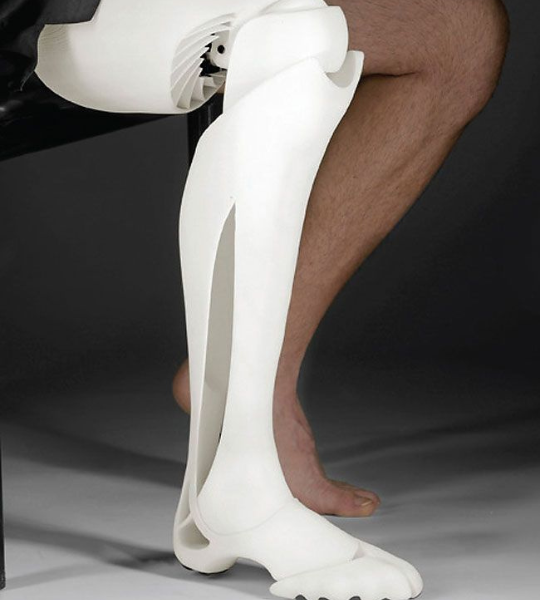
Key engineering considerations include:
• Load management and force distribution — Prosthetic structures must safely transfer
forces generated during walking, running, climbing, and other daily activities while
minimizing stress concentrations that could lead to failure.
• Weight optimization — Reducing unnecessary mass is critical for comfort and energy
efficiency, while maintaining the structural strength required for reliable operation.
• Material and structural design — We evaluate material properties, stiffness, fatigue
resistance, and manufacturing feasibility to develop practical and durable component
designs.
• Modular integration — Prosthetic systems often require interchangeable components,
requiring precise connection standards, alignment mechanisms, and secure attachment
solutions.
• User-specific adaptation — Structural designs must accommodate differences in body
geometry, mobility requirements, and activity levels to provide effective solutions for
different users.
A major engineering challenge is designing structures that are simultaneously lightweight, strong,
and comfortable. Unlike conventional mechanical systems, prosthetic structures interact directly
with the human body and must account for dynamic movement, changing loads, and user behavior.
Engineers must consider not only mechanical performance but also ergonomics, alignment, and the
overall interaction between the device and the user.
Another challenge is ensuring long-term reliability. Prosthetic components experience thousands of
loading cycles over their lifetime, requiring careful evaluation of fatigue performance, connection
points, and structural durability. Small design decisions, such as the geometry of a connector or the
stiffness of a support element, can significantly influence overall performance.
Through mechanical engineering, biomechanical analysis, and iterative optimization, we develop
prosthetic structural systems that provide a reliable foundation for advanced limb solutions. Our role
is to transform clinical and functional requirements into engineered designs that support future
prototyping, testing, and medical device development.